
Applications close May 2026
Train to plan, place and restore
A 15-month full-time MSc on the Birmingham campus. Clinical skills are taught and developed in a simulated environment, including cadaver training, under the direct supervision of expert faculty. The programme does not include clinical training on real patients, and we would rather say so now than let you find out later. 180 Master's credits, with a curriculum that conforms to GDC safe practitioner guidance.
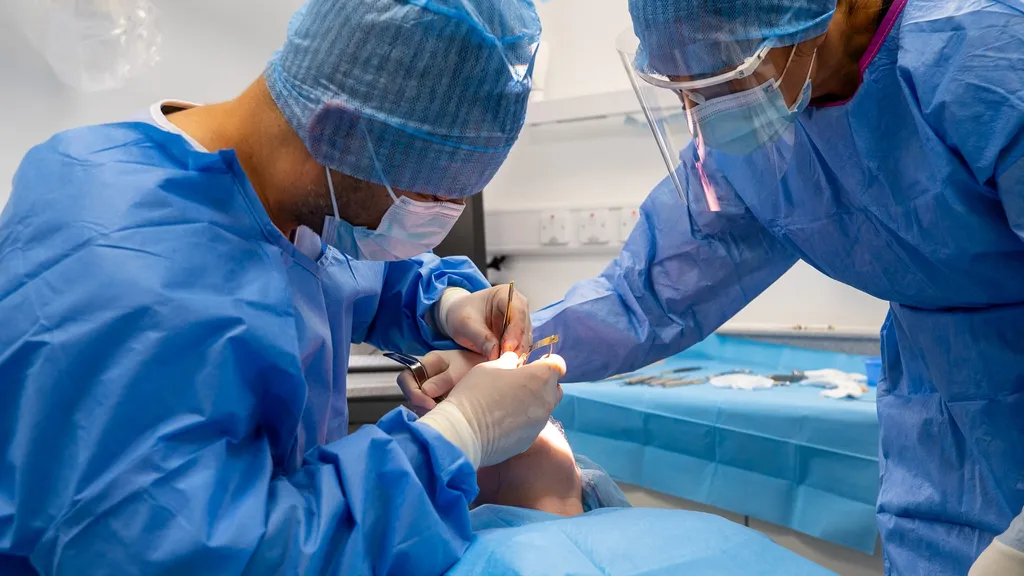
Inside the programme
Built for the cases you send away
Two semesters from September to July, then one more from September to January, full time and campus based in Birmingham. Fifty of the 180 credits go to research and every student completes a dissertation. Entry starts with a BDS or equivalent and registration in good standing with a recognised dental regulatory body; references and English language requirements also apply. Total programme fee: £66,000 (Year 1: £44,000; Year 2: £22,000). Implant dentistry is not a GDC specialist list, so this is not specialist registration. Applications close in May 2026.
Placement and restoration, both halves
You are trained in the surgical placement and in the restorative work that follows. Most short implant courses give you one half of a case, which is exactly why the other half keeps getting referred out.
Simulators and cadavers, expert supervised
Clinical proficiency is built in a simulated environment with cadaver training, under the direct supervision of faculty. There is no treatment on real patients during the programme, and we would rather say that upfront than bury it.
Written to GDC safe practitioner guidance
The curriculum conforms to the General Dental Council's safe practitioner guidance and is structured around what safe implant provision genuinely requires, from soft and hard tissue assessment through to complex treatment planning.
A full Master's, 180 credits
Fifty of the 180 credits are allocated to research, and you complete a dissertation. It can be a primary research study, a systematic literature review or a clinical audit, so it can be aimed at a question from your own practice.
Taught by UK and US trained experts
Live sessions with leading implant clinicians and specialists, regular tutorials and progress meetings with an academic tutor, and pastoral support that runs the whole fifteen months rather than the first fortnight.
One fee, two instalments
The programme fee is £66,000 in total, paid £44,000 in Year 1 and £22,000 in Year 2 and agreed at the point you enrol.
At a glance.
Starts September 2026.
Register your interest
Tell us where you’re starting from.
A few details, and a dedicated Recruitment Officer calls you — to talk through entry requirements, how the teaching runs and how to secure your place.
- A dedicated Recruitment Officer guides you through the application — no obligation.
- Clear answers on entry requirements, intakes and how the teaching is delivered.
- Talk through the fee options, funding and how to reserve your place.
MSc in Oral Implantology (Full Time 15 Months)
September 2026 intake · full time, 15 months on the Birmingham campus
Good to know
Common questions
Will I be placing implants in real patients during the programme?
No, and we would rather be straight about that than let you find out later. Clinical skills are taught and developed in a simulated environment, including cadaver training, under the direct supervision of expert faculty. The programme does not include clinical training on real patients. What it is built to do is give you the diagnosis, treatment planning and technique so that the first case you take on in your own practice is one you are genuinely ready for.
When does it start, and how are the 15 months actually structured?
The programme starts in September 2026 and applications close in September. Year 1 runs from September to July across two semesters. Year 2 runs from September to January, a single semester. It is full time and campus based throughout at the College of Medicine and Dentistry, Birmingham Campus.
What do I need to be accepted?
A Bachelor of Dental Surgery (BDS) or equivalent from a recognised institution, and registration in good standing with a recognised dental regulatory body, the GDC in the UK or an equivalent international authority. You will also need evidence of English language proficiency (GCSE grade C or equivalent; international applicants normally IELTS for UKVI Academic 6.0 overall with no band below 5.5) and two satisfactory references, one of which must be academic. Sponsored applicants also provide a letter of sponsorship and financial guarantee.
What does the £66,000 actually cover?
It is paid across the two years of the programme: £44,000 in Year 1 and £22,000 in Year 2, with the full amount agreed at enrolment.
Do I have to write a dissertation?
Yes. Fifty of the 180 credits are allocated to research, and every student completes a dissertation in an area relevant to their field. Depending on the programme requirements and your own interests, that can take the form of a primary research study, a systematic literature review or a clinical audit, so it can be pointed at something you actually want to know.
Will this qualify me to take on implant cases in my own practice?
The programme is designed to deliver the training that supports recognition of the additional skills required to practise implant dentistry, and the curriculum conforms to GDC safe practitioner guidance. Implant dentistry is not a GDC specialist list, so this is not specialist registration and we will not describe it as such. What you leave with is a Master's level grounding in diagnosis, planning, surgical placement and restoration, and the clinical judgement to know which cases are now yours and which still belong with someone else.